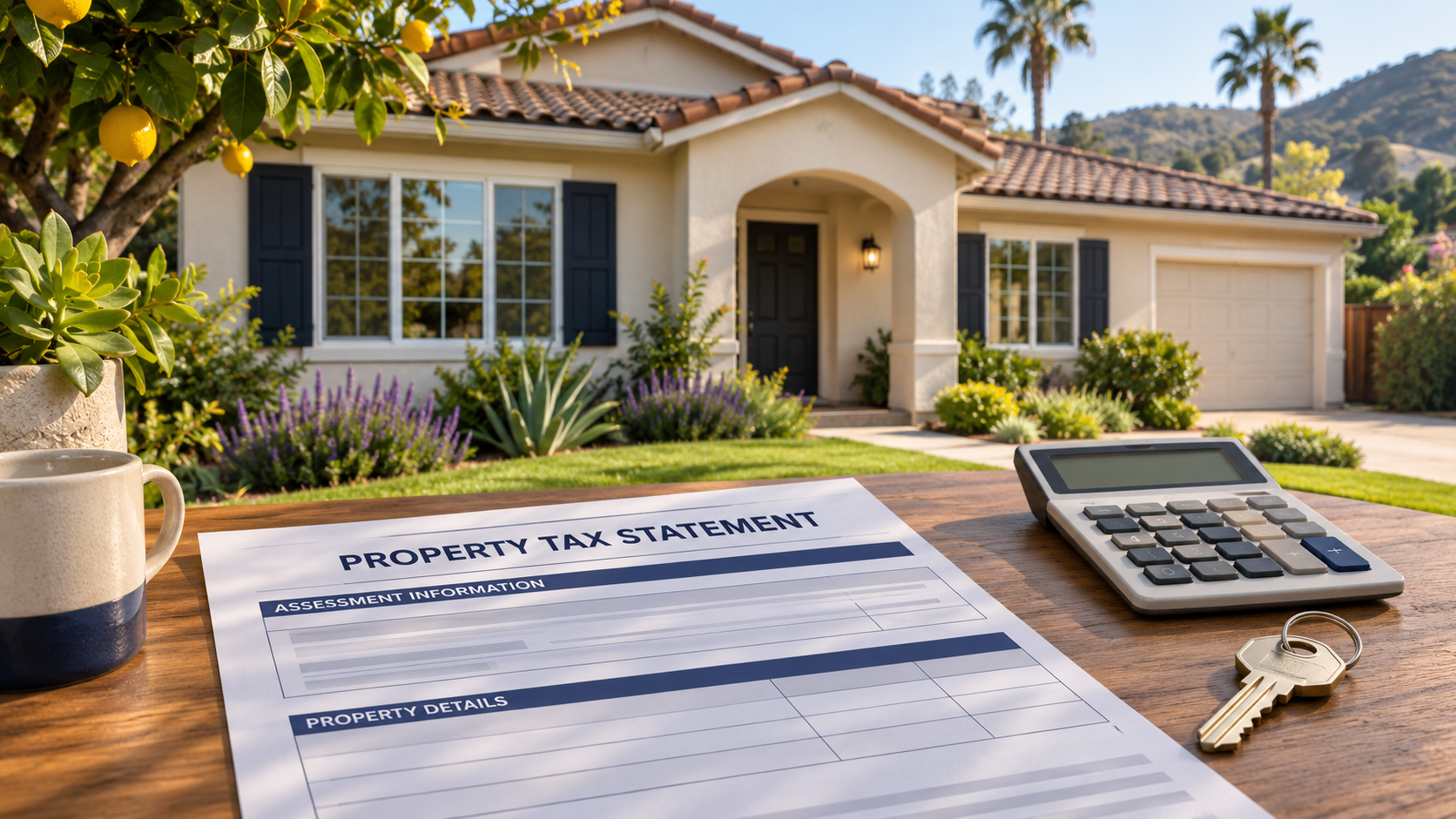
Your property tax bill has a value on it. But would a buyer actually pay that amount for your home?
That number answers a different question.
Your Tax Bill Isn’t a Price Tag
Save the quick-reference guide with the key distinctions, common misconceptions, and a five-minute homeowner check.
Download the PDF →Assessed value and market value serve different purposes
Assessed value helps determine property taxes. A market value estimate looks at recent sales of similar homes, your property’s condition and location, and today’s buyer demand.
California adds an important wrinkle. Proposition 13 generally limits annual inflation increases to a property’s base year value to 2%. Ownership changes and new construction can trigger reassessment, subject to exclusions. Assessments recovering from temporary reductions can also rise by more than 2%. Learn more from the California State Board of Equalization (opens in a new tab).
That helps explain why similar homes in Sacramento, El Dorado, or Placer counties can have different assessed values. Purchase timing matters.
Three conclusions your tax bill cannot prove
“My assessment is low, so my home value must be low.”
A low assessment isn’t evidence that your home would sell cheaply. A long-held property may simply have a taxable value that has grown more slowly than the surrounding market.
“My neighbor pays more, so their home must be worth more.”
Neighbors can have very different property-tax bills because they purchased at different times or completed different improvements. That difference does not rank the homes by current market value.
“An online estimate gives me the exact number.”
Automated estimates can be a useful starting point, but they may not reflect condition, upgrades, lot characteristics, views, or the details buyers are rewarding right now. A careful value opinion uses current comparable sales and property-specific context.
A five-minute homeowner check
- Find the assessed value on your current property-tax statement.
- Note roughly when you purchased the home and any major permitted improvements since then.
- Compare recent nearby sales that are genuinely similar in size, condition, location, and features.
- Write down the two or three property details an automated estimate is most likely to miss.
The goal is not to turn a tax statement into a valuation. It is to recognize what the assessment measures, then use current market evidence when you need a potential selling price.
Want a clear, property-specific value review? Contact Dean Rinker at 916.508.5353 or DeanSellsFast.com.
General education only; not tax or legal advice. Ask your county assessor or qualified adviser about your specific situation.


